01Patient-specific
IUXTA-3D
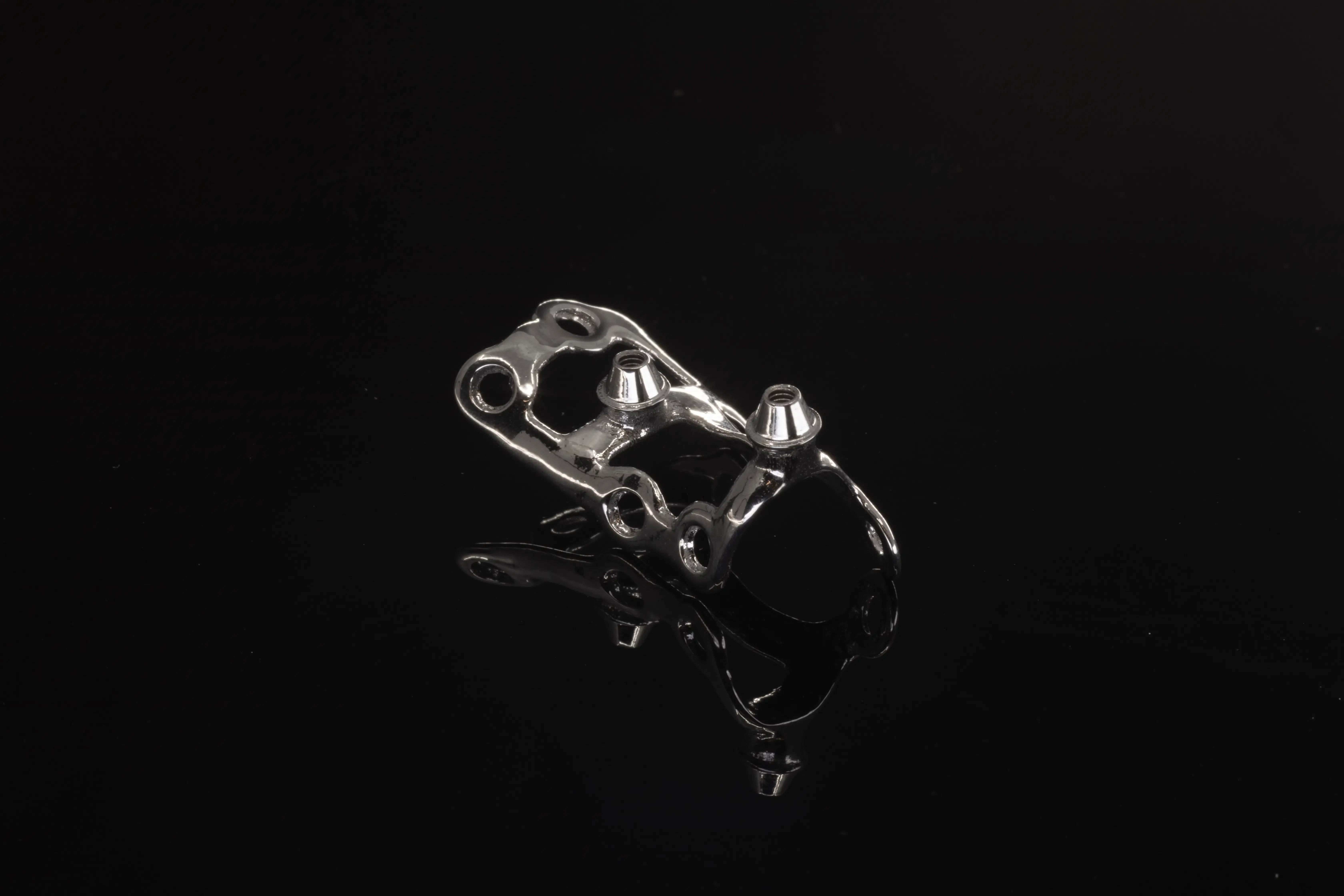
A custom 3D-printed subperiosteal implant system made from Grade 5 Medical Titanium, with FEM analysis for load testing and a screw-retained BS connection.

Digital regeneration
Patient-specific digital solutions for planning, shaping and supporting complex regenerative cases.
Digital regeneration connects clinical diagnosis with a plan made for the patient. Explore IUXTA-3D, 3D MESH and 3D-BONE, then upload a case to begin a conversation.
Digital planning is a clinical process. Submit the relevant case information so the team can review the proposed route.
Product details
Digital regeneration
A custom 3D-printed subperiosteal implant system made from Grade 5 Medical Titanium, with FEM analysis for load testing and a screw-retained BS connection.
A digital approach to creating a patient-specific mesh that follows the anatomy and supports the planned regenerative objective.
A digitally planned regenerative solution for cases where the shape and volume of the defect require a considered, patient-specific approach.
The digital workflow begins with the clinical information, imaging and desired outcome. A proposed design can then be reviewed before production.
Technical information
| Solutions | IUXTA-3D, 3D MESH and 3D-BONE. |
|---|---|
| IUXTA-3D material | Grade 5 Medical Titanium. |
| IUXTA-3D connection | Screw-retained BS connection. |
| IUXTA-3D analysis | FEM analysis for load testing. |
| 3D-BONE composition | 30% Hydroxyapatite (HA) and 70% Beta Tricalcium Phosphate (β-TCP). |
| 3D-BONE porosity | 70%. |
| 3D-BONE compressive strength | 6 MPa. |
IUXTA-3D
IUXTA-3D is a custom 3D-printed subperiosteal implant system made from Grade 5 Medical Titanium. FEM analysis is used for load testing, and the system uses a screw-retained BS connection.
3D MESH
3D MESH is a digital approach to creating a patient-specific mesh that follows the anatomy and supports the planned regenerative objective. The proposed design is reviewed as part of the clinical workflow.
3D-BONE
3D-BONE is composed of 30% Hydroxyapatite (HA) and 70% Beta Tricalcium Phosphate (β-TCP). It has 70% porosity and a compressive strength of 6 MPa.
Digital workflow
The digital workflow begins with clinical information, imaging and the desired outcome. A proposed design can then be reviewed before production.
Digital planning is a clinical process. Submit the relevant case information so the team can review the proposed route.
TUSC Dental · UK and Ireland